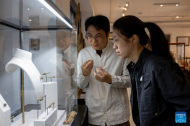
(ECNS) — A small shop near Sera Monastery in Lhasa offers a range of items used in traditional Tibetan funeral rituals, including earthenware pots, white cloth, butter lamps and hemp ropes. The shop aims to make funeral supplies more accessible, ease the burden on bereaved families and help younger generations reconnect with traditional customs.
Named 'Shansuo', the shop opened in May 2026 and is run by three young Tibetans born in the 1990s: Danzeng Zhuoga, Suolang Quzhen and Zhaxi Wangjiu. It also offers a free guide in Chinese and Tibetan outlining local funeral customs and procedures.
Danzeng Zhuoga, a graduate of the Central University of Finance and Economics who previously worked in the education sector, said many young people today have little knowledge of traditional funeral practices amid rapid urbanization and changing lifestyles.
A survey conducted by the three founders found that nearly 80% of respondents did not know what to do if a family member died.
To document local traditions, the three spent more than a year visiting Lhasa, Xigaze and other parts of Xizang Autonomous Region, consulting older residents and collecting accounts of funeral customs. They sought to preserve practices passed down largely through oral tradition that risk being lost over time.
At Shansuo, funeral supplies are brought together under one roof, and visitors can pick up the guide for free. Compiled with reference to folk customs literature, educational materials and accounts from older residents, the guide is intended to make traditional practices easier to understand.
For the three founders, however, preserving tradition means more than keeping rituals alive. It also means understanding the emotional connections behind them.
In Lhasa, families typically consult a Tibetan astrologer following a death, providing details such as the deceased's age, zodiac sign and time of death. The astrologer then determines an auspicious date for the funeral and advises the family on what items need to be prepared. Relatives also generally observe a series of rituals at seven-day intervals.
While the deceased remains at home, family members prepare a ritual offering known as "su," made by kneading roasted barley flour, or tsampa, with milk and sugar.
Unless time is limited, the founders encourage bereaved families to prepare the offering themselves, Danzeng said. She described the process as an opportunity for relatives to express their feelings and maintain an emotional connection with the deceased.
Since opening the shop, the founders have witnessed not only the sorrow of losing loved ones but also the warmth and mutual support shared by relatives and friends during funeral arrangements.
"Many people see death and the loss of a loved one as something negative. But through this process, we have seen love and the emotional bonds between people," Danzeng said.
Some visitors come to the shop to talk about the loss of loved ones or farewells they never had the chance to say. Often, what they need is not extensive consolation but simply someone willing to listen, she said.
In her view, funeral rituals are not only a way to bid farewell to the deceased, but also help the living come to terms with their grief and strengthen family ties.
The three founders are still exploring how to balance the shop's commercial operations with its mission of preserving cultural traditions. They plan to expand into life education and explore ways to promote a deeper understanding of life and death, while continuing to document folk customs and collect oral histories from older residents across Xizang.
(By Zhang Dongfang)