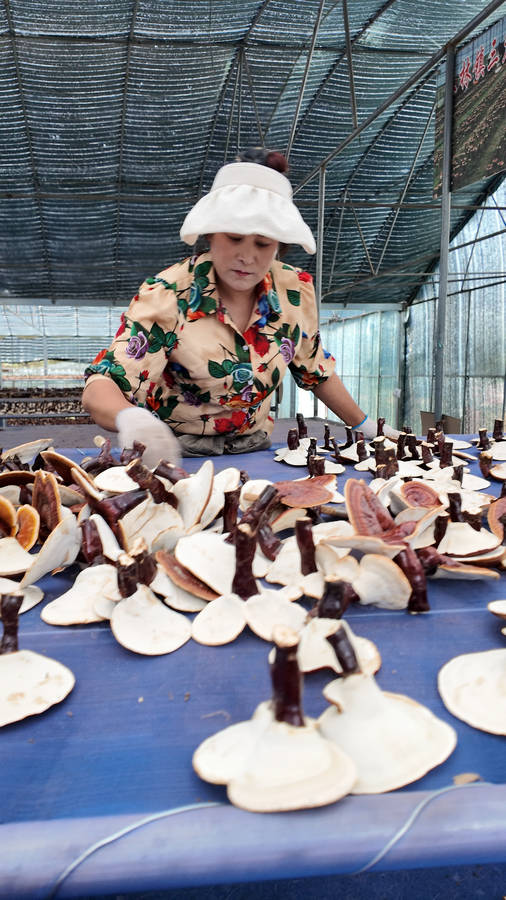
Local farmer Deji works at the Red Sun Family Farm in Mainling, Nyingchi city, Southwest China's Xizang autonomous region, in late August 2026. [Photo by Yang Xiaoyu/chinadaily.com.cn]
Lingzhi, also known as reishi mushroom, has been used in traditional Chinese medicine for thousands of years, with properties believed to enhance the human body's immune system.
A group of local housewives, carrying baskets full of lingzhimushrooms on the back, chattered while walking into a vast drying shed and soon started rolling the fresh harvest onto the drying platform.
The lively scene, taking place on an afternoon in late August, is all too common at the Red Sun Family Farm in Mailing of Nyingchi city, Southwest China's Xizang autonomous region.
Deji, who has been working here for two months, is one of them.
Compensated for about 230 yuan ($34.22) a day, the woman said she is happy with the job and the pay. "The work on the farm is quite easy and it enables me to better take care of my family," she told the China Daily website.
Deji is also one of some 1,000 local villagers benefitting from the thriving growth of the Red Sun Family Farm.
Founded by farmer and herder Nima in 2012, the farm specializes in growing the sought-after white-fleshed lingzhi mushrooms along with other Tibetan medicinal herbs.
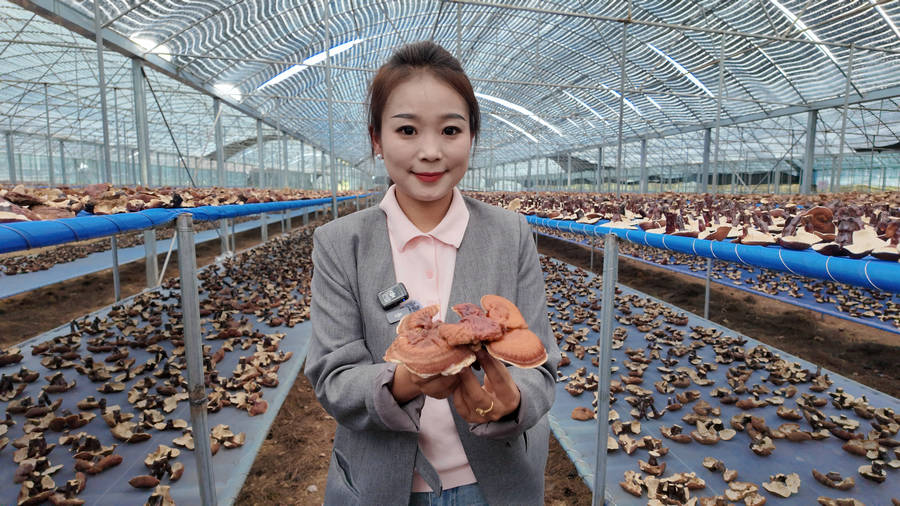
DawaSuozhen, sales manager of the Red Sun Family Farm, presents the lingzhi mushrooms grown in the forest and in the greenhouse in Mainling, Nyingchi city, Southwest China's Xizang autonomous region, in late August 2026. [Photo by Yang Xiaoyu/chinadaily.com.cn]
Also called Nyingchi's lingzhi, the white-fleshed fungus was recognized as a national geographical indication product in 2014.
"Thanks to the drastic temperature difference and pollution-free environment of the Qinghai-Tibetan Plateau, the lingzhi mushrooms here boasts superior quality than those grown in lower altitude regions," DawaSuozhen, sales manager of the farm, said.
The Red Sun Family Farm manages seven semi-wild lingzhi mushroom plantations in the forest, covering an area of 532.6 mu (35.51 hectares) along with 417 greenhouses growing the fungus, covering 481.5 mu (32.1 hecatres).
The farm, which produced more than 1,6000 kilos of dried lingzhi mushrooms in 2025, generated a net profit of 9.2 million yuan ($136,885,9), DawaSuozhen said.
"We supply mushroom growing kits purchased by the government to local village collectives and provide technical support to 426 lingzhi-growing families in Mainling to increase their output," said the sales manager.
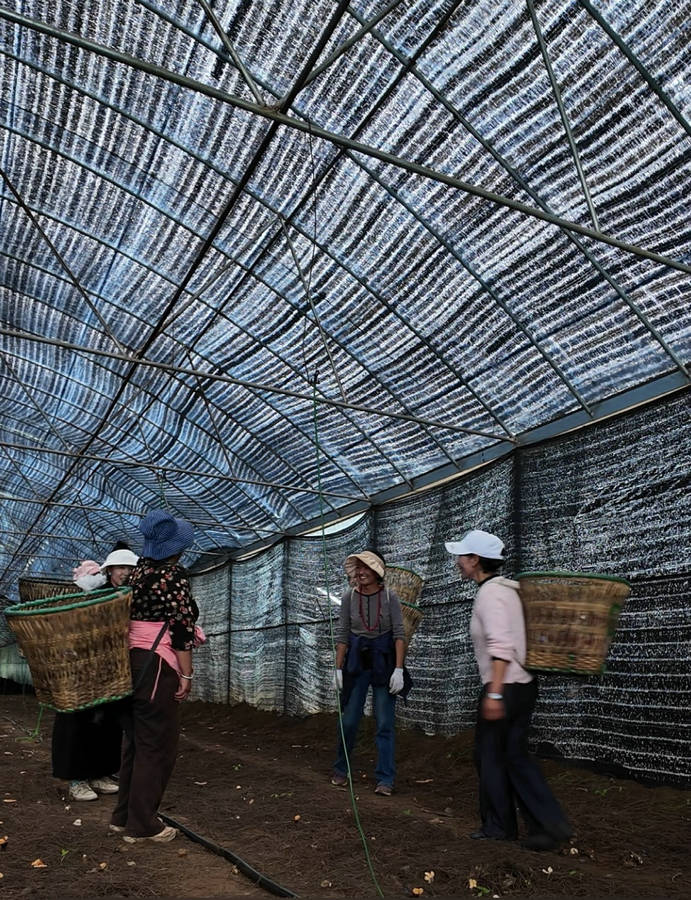
A group of local housewives work at a greenhouse of the Red Sun Family Farm in Mainling, Nyingchi city, Southwest China's Xizang autonomous region, in late August 2026. [Photo by Yang Xiaoyu/chinadaily.com.cn]
The farm also purchases all the ripe lingzhi mushrooms from the village collectives, saving villagers the trouble of looking for sales channels. Since 2017, a total of 7.13 million yuan ($1,060,866) has been paid to ten village collectives in Mailing for lingzhi mushrooms, enabling each collective to add annual income of 200,000 to 400,000 yuan ($29,759~$59,516), DawaSuozhen said.
In addition to making money from growing lingzhi mushrooms, more than 110 villagers are hired each winter to prepare the mushroom growing kits, which is labor intensive.
"Last year we paid 2.6 million yuan ($386,851) to villagers for their seasonal work at the farm," said the sales manager.
Recognized for helping lift hundreds of rural families out of poverty and bettering their livelihoods, the Red Sun Family Farm was promoted nationwide as a typical case of family farms in 2024.
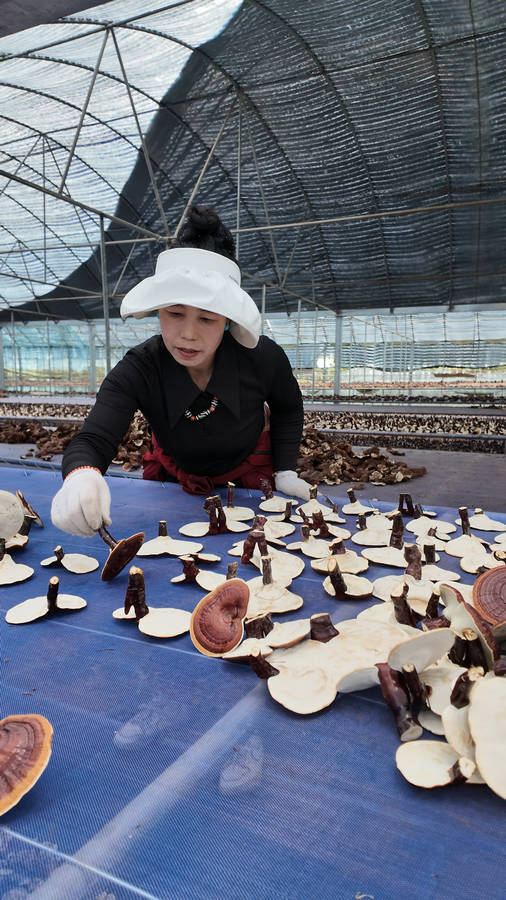
A local farmer works at the Red Sun Family Farm in Mainling, Nyingchi city, Southwest China's Xizang autonomous region, in late August 2026. [Photo by Yang Xiaoyu/chinadaily.com.cn]


