The Tibet autonomous region continues to rank among the best places in the world for ecological quality, and its environment is in good condition generally, according to the region's 2021 Environmental Bulletin, which was released last week.
The bulletin, prepared by the regional Department of Environment and Ecology, noted that Tibet has 47 natural reserves, whose combined land area reaches more than 410,000 square kilometers. The reserves account for more than 34 percent of the region's total land.
In 2021, the overall air quality of the region was excellent. The proportion of days with excellent ambient air quality was 99.8 percent over all, while Lhasa, the region's capital, was 100 percent — along with Haikou, Hainan province — the bulletin said.
Shui Yanping, deputy head of the department, said that water quality in the region's major rivers and lakes held steady in good condition last year and have met the standards set by the central government.
"Water quality in the region's key rivers — the Yarlung, Zangbo, Jinsha, Nujiang and Lancang — as well as the Lhasa Kyichu, Myangchu and Nyangchu, have met Class II and above standards," Shui said.
Water quality in the Rongbu River, which flows from Mount Qomolangma (Everest), meets the Class I standard, and all the region's 21 centralized water supply sources in six cities and one prefecture meet Class III standards, Shui added.
The region's forest area hit nearly 15 million hectares, ranking fifth in China. The forest coverage ratio stands at 12.31 percent, and total timber stock volume hit more than 2.2 billion cubic meters, ranking at the top in China.
Wetlands in Tibet total more than 6.52 million hectares, or 5.3 percent of the region's land area — ranking second in China — the bulletin said.
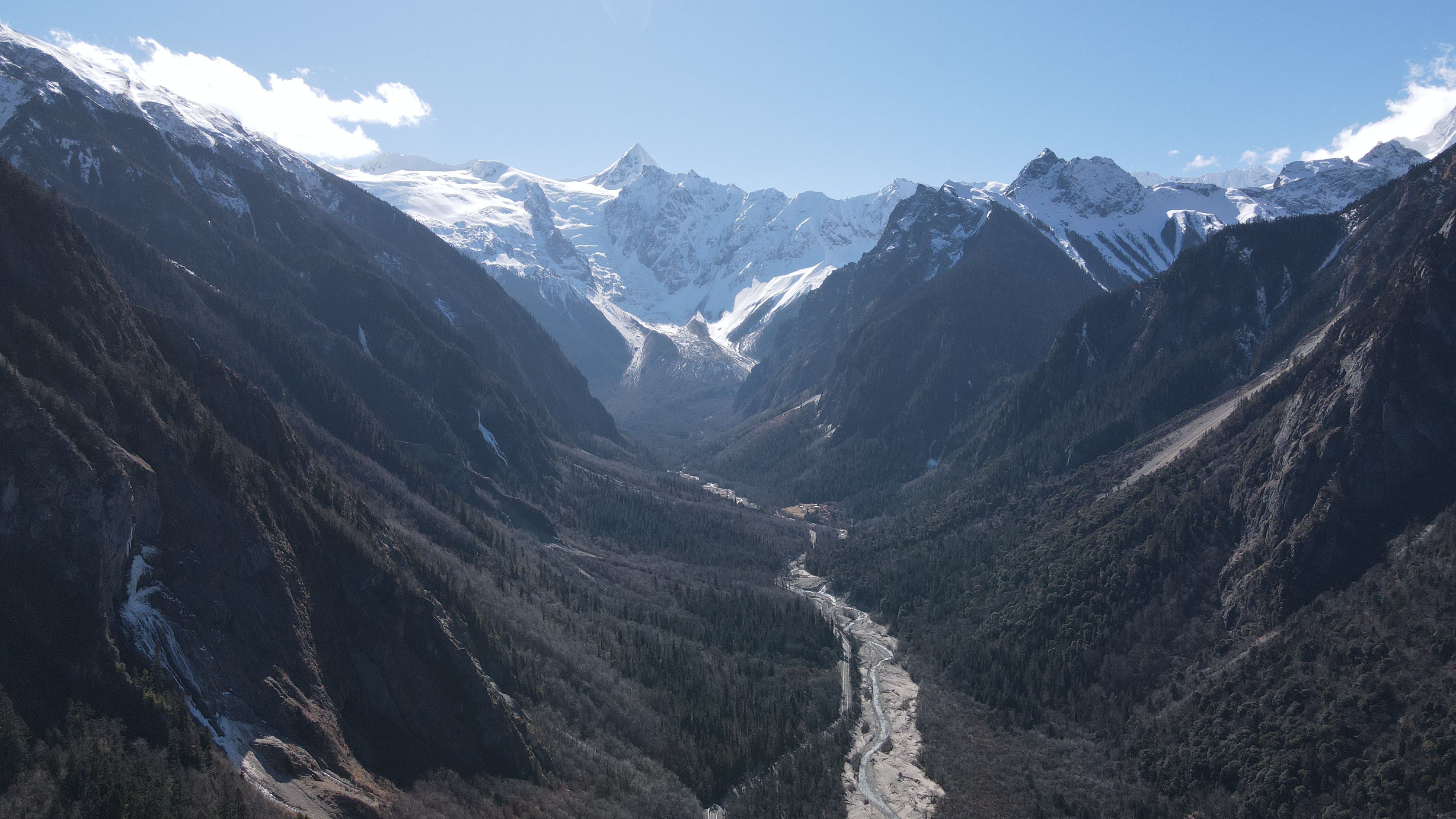
A view of Bomi county in the Tibet autonomous region [Photo by Palden Nyima/chinadaily.com.cn]
 0
0


