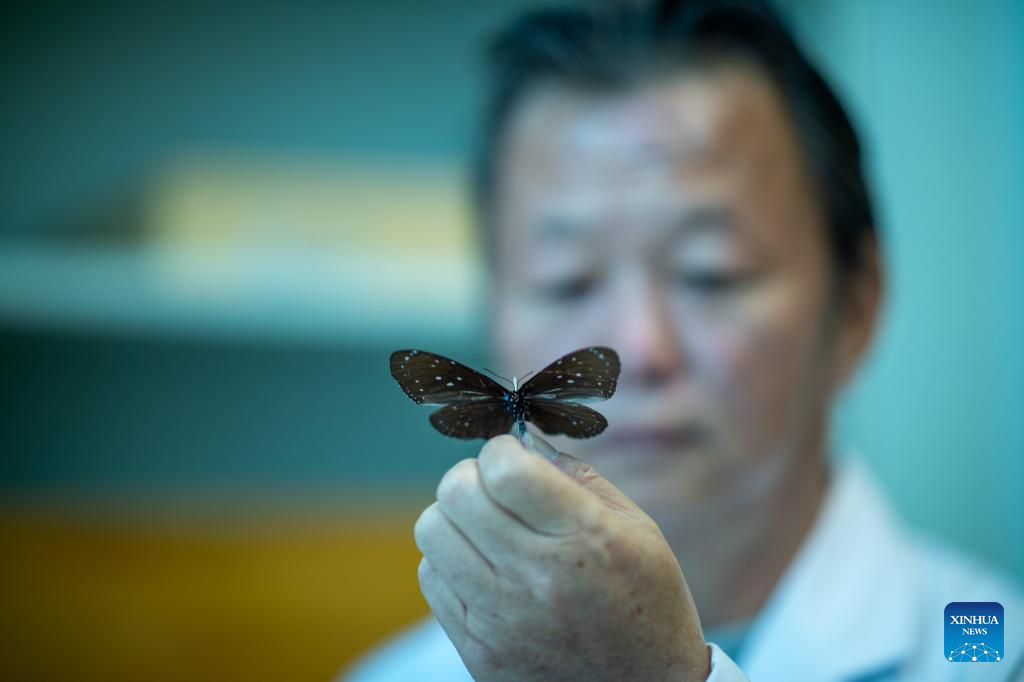
Dawa looks at a butterfly specimen at the regional institute of plateau biology in Lhasa, southwest China's Xizang Autonomous Region, April 22, 2024. The 55-year-old Dawa is an associate researcher at the regional institute of plateau biology in Xizang. He has been engaged in insect classification research for more than 30 years.
For years, Dawa and his colleagues would conduct more than 140 days of field research every year in the region. So far they have discovered more than 300 new species of butterflies in Xizang.
Dawa said that collecting insects helps better understand and protect these rare species, and provides a scientific reference for protecting the ecological balance of the plateau. (Xinhua/Tenzing Nima Qadhup)
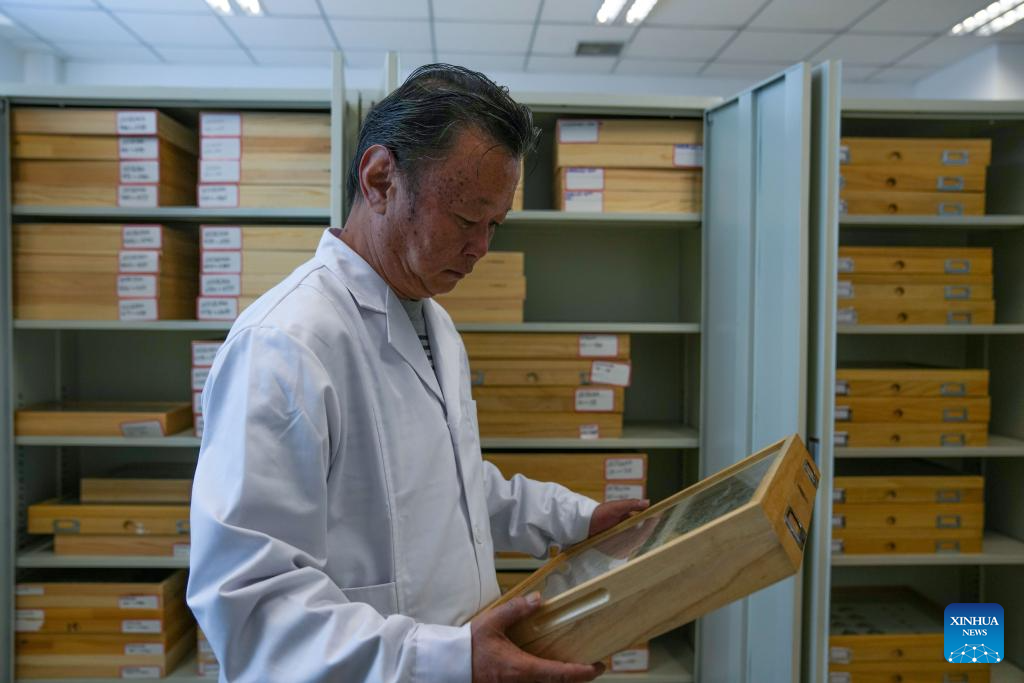
Dawa looks at insect specimens at the regional institute of plateau biology in Lhasa, southwest China's Xizang Autonomous Region, April 22, 2024. The 55-year-old Dawa is an associate researcher at the regional institute of plateau biology in Xizang. He has been engaged in insect classification research for more than 30 years.
For years, Dawa and his colleagues would conduct more than 140 days of field research every year in the region. So far they have discovered more than 300 new species of butterflies in Xizang.
Dawa said that collecting insects helps better understand and protect these rare species, and provides a scientific reference for protecting the ecological balance of the plateau. (Xinhua/Tenzing Nima Qadhup)
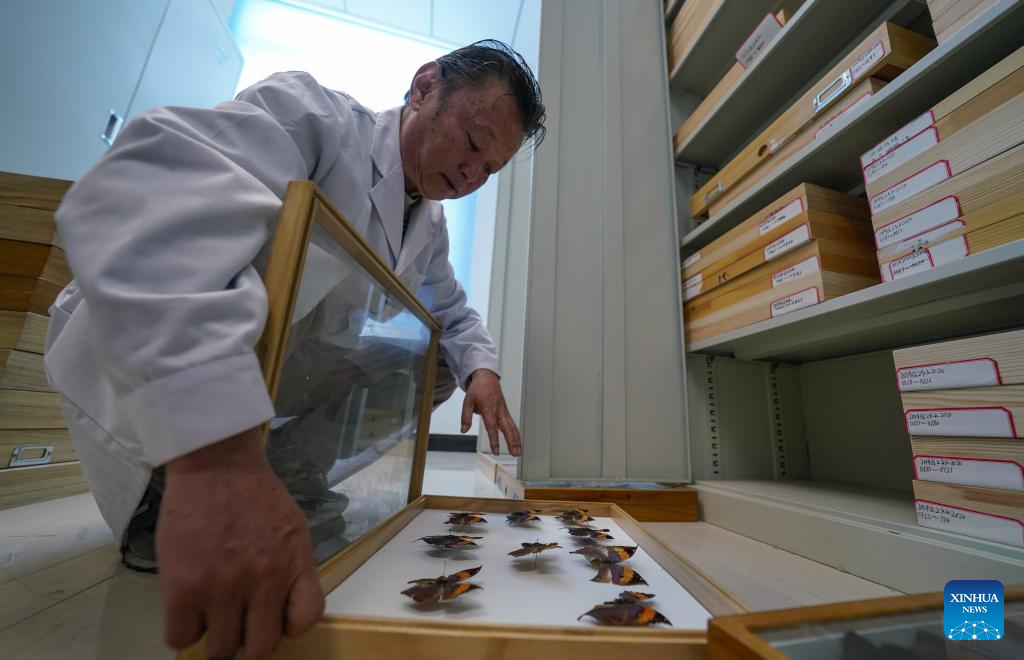
Dawa looks at insect specimens at the regional institute of plateau biology in Lhasa, southwest China's Xizang Autonomous Region, April 22, 2024. The 55-year-old Dawa is an associate researcher at the regional institute of plateau biology in Xizang. He has been engaged in insect classification research for more than 30 years.
For years, Dawa and his colleagues would conduct more than 140 days of field research every year in the region. So far they have discovered more than 300 new species of butterflies in Xizang.
Dawa said that collecting insects helps better understand and protect these rare species, and provides a scientific reference for protecting the ecological balance of the plateau. (Xinhua/Jigme Dorje)
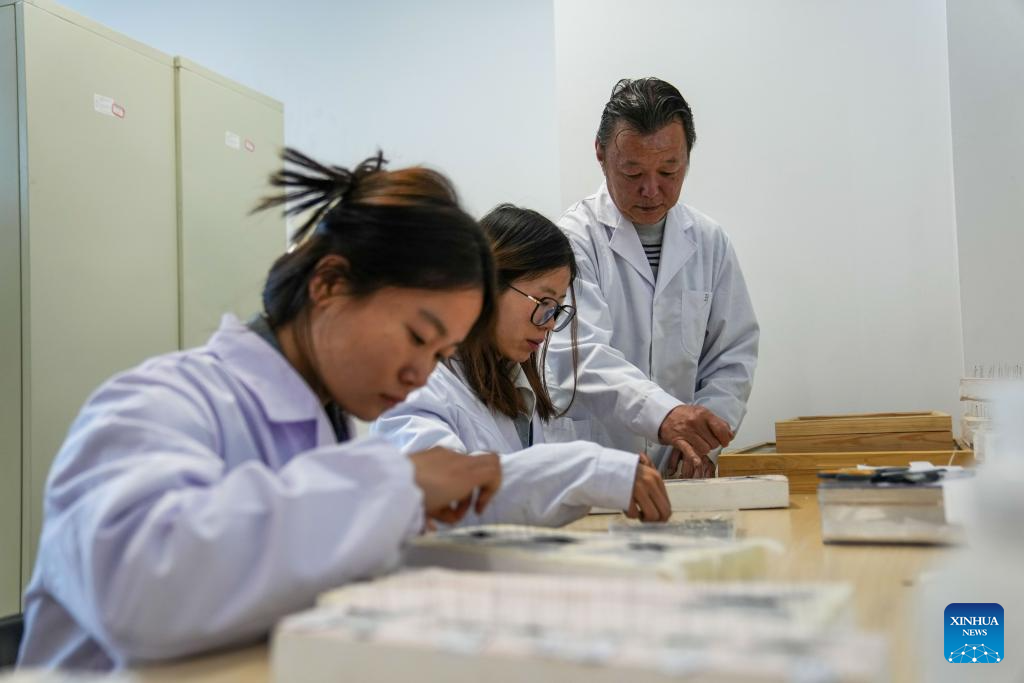
Dawa (R) instructs students in making insect specimens at the regional institute of plateau biology in Lhasa, southwest China's Xizang Autonomous Region, April 22, 2024. The 55-year-old Dawa is an associate researcher at the regional institute of plateau biology in Xizang. He has been engaged in insect classification research for more than 30 years.
For years, Dawa and his colleagues would conduct more than 140 days of field research every year in the region. So far they have discovered more than 300 new species of butterflies in Xizang.
Dawa said that collecting insects helps better understand and protect these rare species, and provides a scientific reference for protecting the ecological balance of the plateau. (Xinhua/Tenzing Nima Qadhup)

Dawa together with students input insect data at the regional institute of plateau biology in Lhasa, southwest China's Xizang Autonomous Region, April 22, 2024. The 55-year-old Dawa is an associate researcher at the regional institute of plateau biology in Xizang. He has been engaged in insect classification research for more than 30 years.
For years, Dawa and his colleagues would conduct more than 140 days of field research every year in the region. So far they have discovered more than 300 new species of butterflies in Xizang.
Dawa said that collecting insects helps better understand and protect these rare species, and provides a scientific reference for protecting the ecological balance of the plateau. (Xinhua/Jigme Dorje)
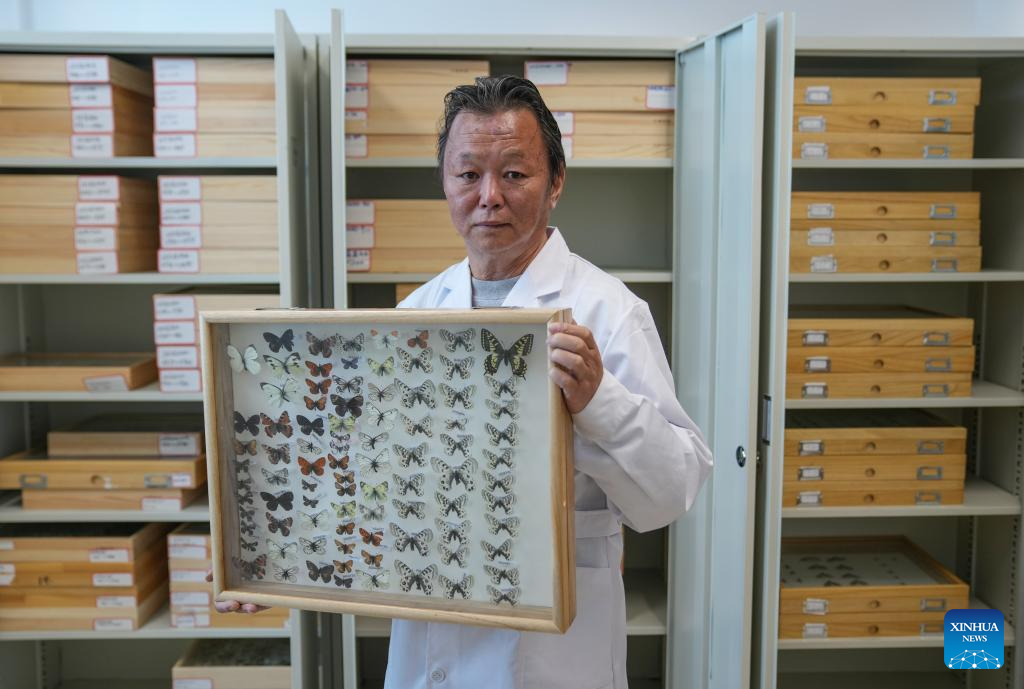
Dawa shows butterfly specimens at the regional institute of plateau biology in Lhasa, southwest China's Xizang Autonomous Region, April 22, 2024. The 55-year-old Dawa is an associate researcher at the regional institute of plateau biology in Xizang. He has been engaged in insect classification research for more than 30 years.
For years, Dawa and his colleagues would conduct more than 140 days of field research every year in the region. So far they have discovered more than 300 new species of butterflies in Xizang.
Dawa said that collecting insects helps better understand and protect these rare species, and provides a scientific reference for protecting the ecological balance of the plateau. (Xinhua/Jigme Dorje)

Dawa (R) and his colleague check on insect specimens at the regional institute of plateau biology in Lhasa, southwest China's Xizang Autonomous Region, April 22, 2024. The 55-year-old Dawa is an associate researcher at the regional institute of plateau biology in Xizang. He has been engaged in insect classification research for more than 30 years.
For years, Dawa and his colleagues would conduct more than 140 days of field research every year in the region. So far they have discovered more than 300 new species of butterflies in Xizang.
Dawa said that collecting insects helps better understand and protect these rare species, and provides a scientific reference for protecting the ecological balance of the plateau. (Xinhua/Jigme Dorje)


