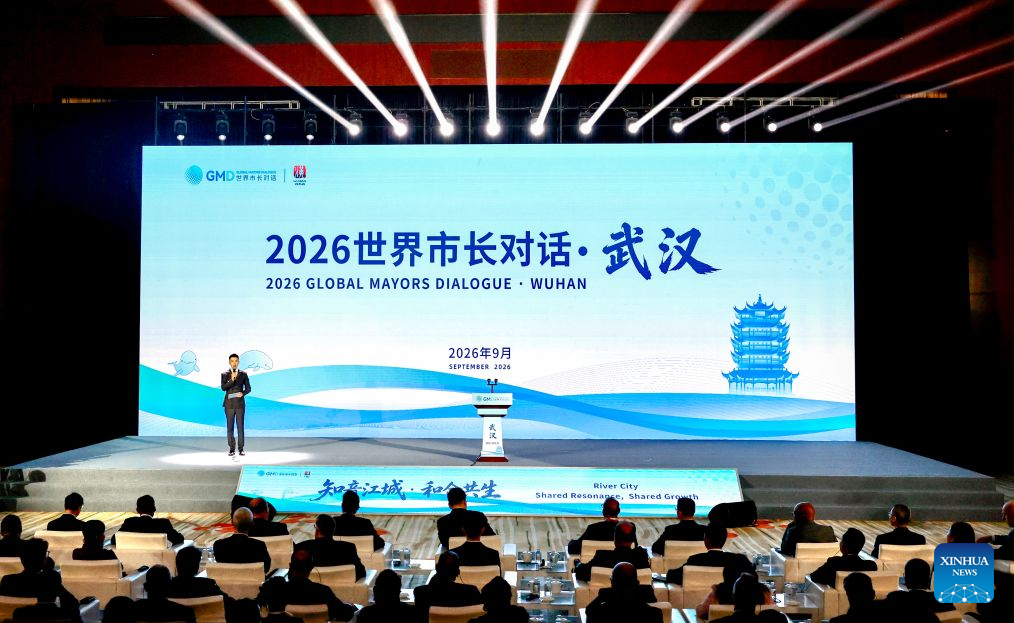
This photo taken on Sept. 20, 2026 shows a scene of the 2026 Global Mayors Dialogue - Wuhan in Wuhan, central China's Hubei Province. (Photo by Ni Na/Xinhua)
WUHAN, Sept. 20 (Xinhua) -- More than 80 city leaders and representatives from over 20 countries, along with heads of international organizations, have gathered in Wuhan, Hubei Province, central China, to discuss shared urban challenges and explore pathways to sustainable development at the 2026 World Mayors Dialogue.
Held from Sept. 18 to 21 under the theme "River City: Shared Resonance, Shared Growth," the event focuses on how technological innovation, industrial cooperation and cultural exchanges can advance urban development and improve people's lives.
Shaukat Ali, Lord Mayor of Manchester, said he was impressed by Wuhan's efforts in developing low-carbon industries and advanced manufacturing, noting that Manchester and Wuhan have jointly established the UK-China Clean Energy Forum to harness the two cities' shared industrial and technological strengths for eco-friendly development.
Manchester and Wuhan became sister cities in 1986 because of shared industrial origins, leading educational institutions, and a shared appetite for economic transformation. As the cities have grown and evolved, the partnership continues to pioneer multi-level exchanges and developmental cooperation between the UK and China, Ali said.
The dialogue comes as Wuhan continues to pursue greener urban development while transforming its traditional industrial base.
Located at the confluence of the Yangtze and Hanjiang rivers, Wuhan is home to 166 lakes and 165 rivers. Once a major industrial center known for steel and automobile manufacturing, the city has in recent years stepped up efforts to improve its environment and promote greener industrial development.
As part of its urban renewal efforts, Wuhan has transformed small plots of unused or underused land into "pocket parks," bringing green space closer to residents. By the end of May, the city had built 788 such parks.
Water quality in Wuhan's sections of the Yangtze and Hanjiang rivers has remained at Grade II, the second-highest level in China's five-tier system, for six consecutive years.
The city also showcased its experience to international participants through visits to its suspended rail transit system, a smart home appliance factory, and a Yangtze finless porpoise breeding and conservation center, offering a closer look at its infrastructure, technological innovation, and ecological protection efforts.
"Our visits have given us different perspectives on how technological innovation and industrial development are reshaping cities and their economies," said Jordi Vaquer, secretary general of Metropolis. "We have also been reminded that innovation and development must coexist with the protection of natural systems."
Vaquer said cities play an important role in keeping international cooperation channels open, as urban challenges transcend national borders.
"None of us can address them entirely alone," he said.
Beyond Wuhan's transformation experiences, the dialogue also comes as China places greater emphasis on sustainable urban development.
This year marks the start of China's 15th Five-Year Plan period (2026-2030). The outline calls for a shift in the approach to urban development and for building cities that are more innovative, livable, beautiful, resilient, culturally vibrant and smart.
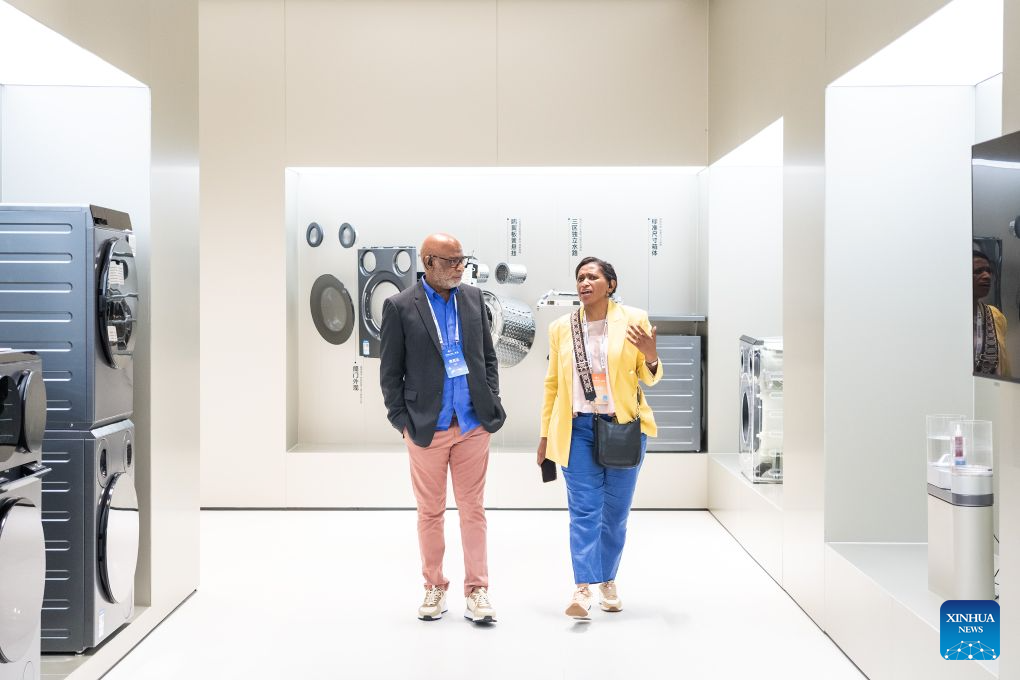
Foreign guests visit an exhibition hall at Xiaomi's smart home appliance factory during the 2026 Global Mayors Dialogue - Wuhan in Wuhan, central China's Hubei Province, Sept. 19, 2026. (Photo by Ren Yong/Xinhua)
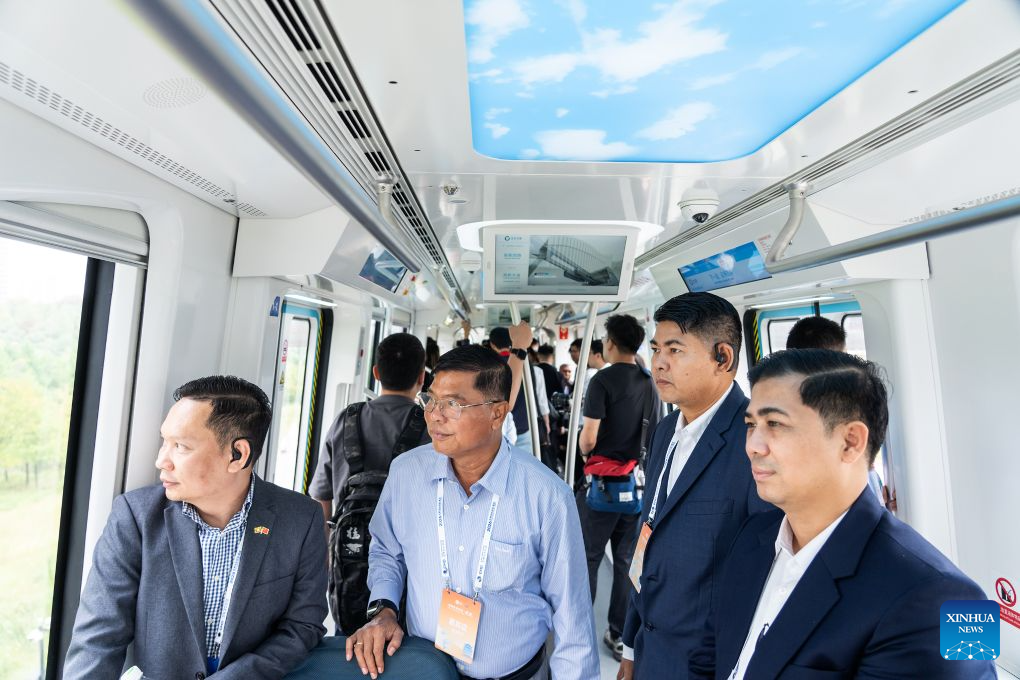
Foreign guests try a train trip running on the suspension monorail line during the 2026 Global Mayors Dialogue - Wuhan in Wuhan, central China's Hubei Province, Sept. 19, 2026. (Photo by Ren Yong/Xinhua)