Recently, Tsering Yumdzong, a deputy to the National People's Congress and deputy chief physician of the Gastroenterology Department of Chamdo Tibetan Medicine Hospital, Tibet Autonomous Region, said in an interview with reporters that she had witnessed the development and prosperity of Tibetan medicine in Tibet.
In May 2021, the White Paper Tibet Since 1951: Liberation, Development and Prosperity was released by the State Council Information Office. The White Paper mentions that the state makes a point of supporting the inheritance and development of Tibetan medicine. The Tibet Tibetan Medicine College was established, and more than 7,000 Tibetan medicine professionals have been trained. Tibetan medicine diagnosis and treatment has been standardized. Currently, there are 44 public Tibetan medicine medical institutions in Tibet, and the coverage rates of Tibetan medicine services in township health centers and village clinics have reached 99.4% and 42.4% respectively.
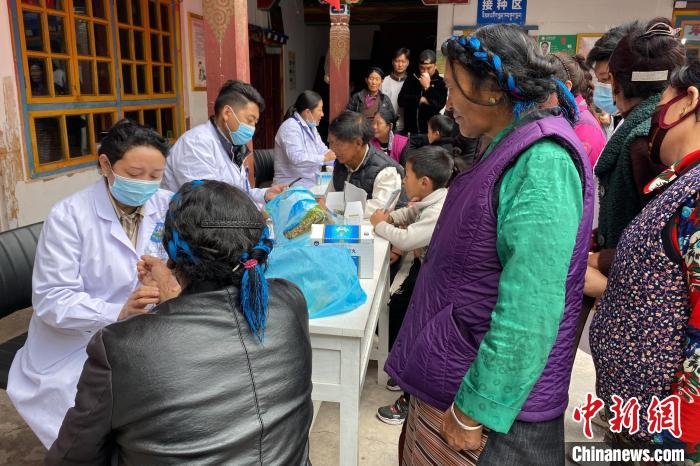
The picture shows Tsering Yumdzong (first from the left in white coat) participating in a free clinic activity.
Tsering Yumdzong pursued his university study in the Tibet Tibetan Medicine College. After graduating, she began to work in the Chamdo Tibetan Medicine Hospital, which then had only two departments of internal medicine and surgery, and only about 30 medical staff. “If a patient needed a surgery, even if it was a minor surgery like appendicitis, we couldn’t do it. We lacked both equipment and personnel, so we could only transfer the patient to a larger hospital.”
With the continuous economic and social development of the Tibet Autonomous Region, especially since the launch of group medical assistance to Tibet, the development of Tibetan medicine has gradually entered the fast lane.
According to Tsering Yumdzong, in 2019, the Chamdo Tibetan Medicine Hospital was upgraded from a third-B-level hospital to a third-A-level one. In May 2020, the hospital’s surgery department successfully completed the first Miles radical resection of rectal cancer in its history through cooperation between the ninth batch of Tianjin aid-to-Tibet team and the hospital’s gastroenterology department, endoscopy department, anesthesiology department and operating room.
“Now our hospital also has visual telemedicine services, and local patients in Chamdo can enjoy advanced medical resources in other provinces and regions at their doorstep through this platform.” Tsering Yumdzong said that this was unimaginable before, and telemedicine services have greatly reduced patients’ burden from receiving medical treatment.
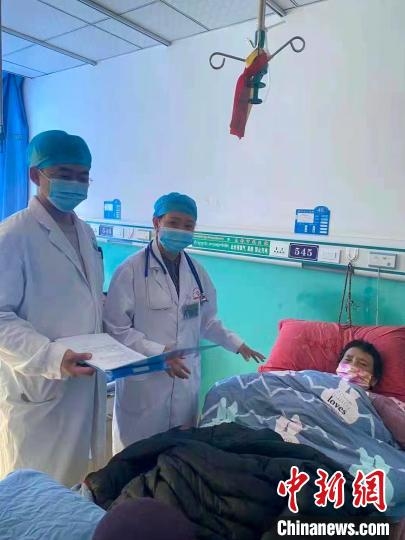
NPC deputy Tsering Yumdzong (middle) works at the frontline of Tibetan medicine diagnosis and treatment.
She said that over the past 20 years, she has personally witnessed the continuous development of Tibetan medicine in Tibet. The Chamdo Tibetan Medicine Hospital mainly focuses on the diagnosis and treatment of Tibetan medicine, with Western medicine as auxiliary examination and treatment. The hospital’s subordinate factory has a modern Tibetan medicine production line, and the annual output of preparations reaches 70 tons. Today, Chamdo Tibetan Medicine Hospital has more than 300 employees and medical staff, and has more than ten departments, including acupuncture and massage, medicated bath, preventive health care and other special departments.
Tsering Yumdzong said that as a medical staff, she deeply realized the importance of learning. In the clinical work, she has always adhered to her original aspiration and insisted on serving patients as the center. “In my future work, I will conscientiously perform my duty as a NPC deputy; give full play to my role and offer good advice and suggestions.”